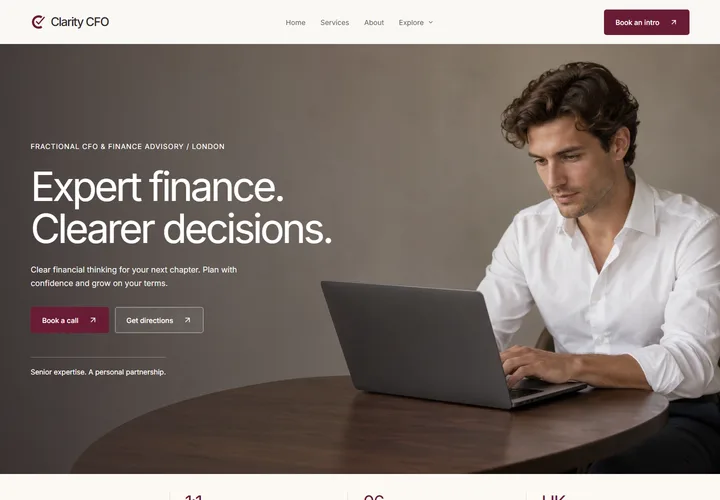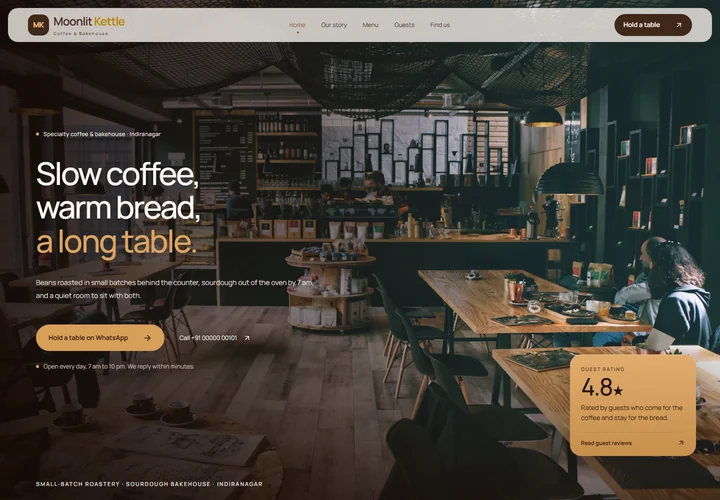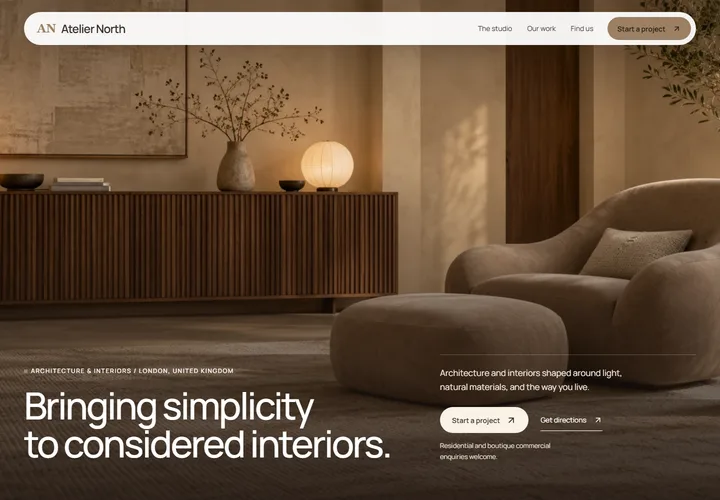

You don’t need to have every detail worked out before thinking about a website. Start with a simpler question: what would a new customer need to know before choosing your business?
Say what you do, straight away
Imagine someone opening your website for the first time. They may have heard your name from a friend, found you on social media, or followed a link. Help them understand what you offer without making them search.
Use a headline you would comfortably say to a customer. ‘Home repairs in Pune’ says more than ‘Solutions for a brighter tomorrow’. Add who you help or where you work when that detail matters.
Show the details people ask for
Your everyday customer questions are a useful starting point for your website. What do you sell? Which areas do you serve? When are you open? How does someone book or ask for a quote?
Put these answers where they belong. Explain your services together. Keep opening hours and location easy to find. For a service that varies from one customer to another, describe how someone can discuss their needs rather than guessing a price.
Give people something real to see
Photos of your work, your space, or the people behind your business can make the page feel more familiar. Choose clear, relevant images over a large collection of unrelated pictures.
If you share customer feedback, use genuine comments with permission. If an image shows an example rather than a finished client project, say so. Clear context is part of building trust.
Make the next step obvious
Choose the action that makes sense for your business: call, enquire, visit, or book. Give the button a clear label such as ‘Ask for a quote’ or ‘Plan your visit’.
Then try it on your own phone. Can you read the important details comfortably? Can you find the contact option without hunting? Does the button lead somewhere useful? A website can start small and still give customers a clear way forward.